Introduction to Ossm Neuro Chapter 9 Phototransduction
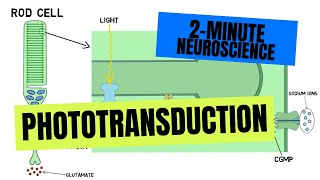
Let's dive into the details surrounding Ossm Neuro Chapter 9 Phototransduction. The photoreceptors in the retina convert light into a change in membrane potential which is how they detect light.
Ossm Neuro Chapter 9 Phototransduction Comprehensive Overview
Quite a bit of processing of visual stimuli occurs in the retina before any information gets to the brain. The retinal ganglion cells send information from the eye to the brain. There are two main types. Before we talk about vision, we have to talk about light.
This video explains how the cells in the retina can produce different rates of firing in the retinal ganglion cells. Animation and ... Many types of cells with specialized receptive fields in primary visual cortex lay the groundwork for visual perception.
Summary & Highlights for Ossm Neuro Chapter 9 Phototransduction
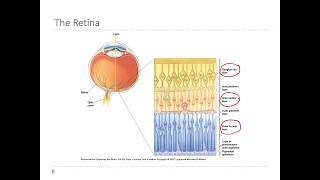
- The retina is made of three main layers of cells: the photoreceptors detect light and connect to bipolar cells which connect to ...
- The retina is where images are formed by light coming into the eye.
- The eye is a simple but elegant organ which is fine tuned to focus light and create images on the retina.
- Official Ninja Nerd Website: Ninja Nerds! In this lecture, Professor Zach Murphy will take you step-by-step ...
- In this video, I cover the pathway visual information travels moving from the eye to the visual cortex and surrounding areas. First ...
That wraps up our extensive overview of Ossm Neuro Chapter 9 Phototransduction.